
Language is more than words. It’s identity, culture, and a window into how we think and feel.
Many people use “mother tongue” and “native language” interchangeably, but the distinction matters in linguistics, education, and everyday life.
This guide explores the nuances, historical roots, cultural implications, and practical applications of these terms.
Understanding the Basics: Defining Mother Tongue and Native Language
At first glance, mother tongue and native language seem the same—they both refer to the language we grow up speaking. But there are subtle yet important differences.
- Mother Tongue
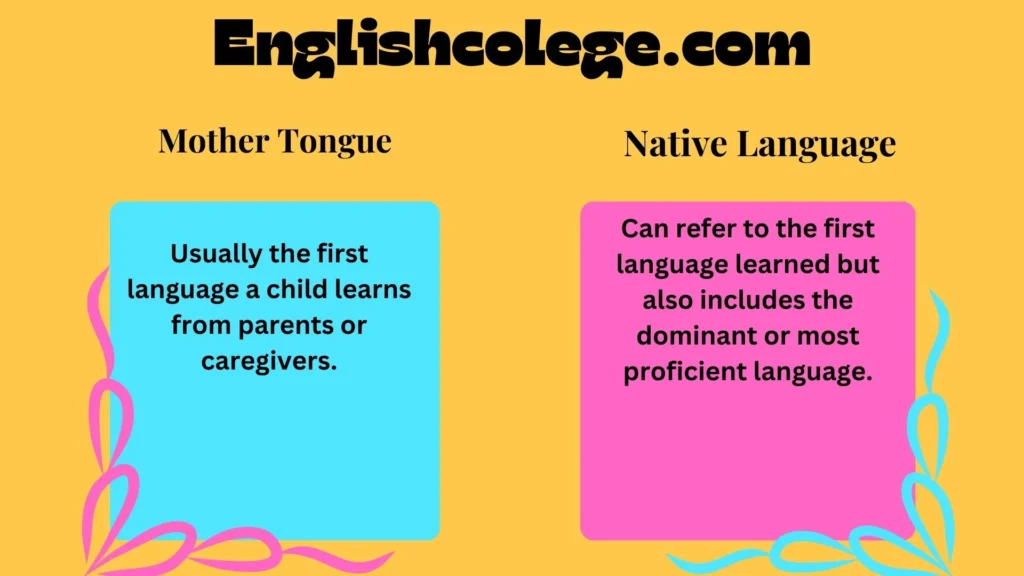
- Usually the first language a child learns from parents or caregivers.
- Closely tied to early cognitive and emotional development.
- Often carries cultural and familial identity.
- Native Language
- Can refer to the first language learned but also includes the dominant or most proficient language.
- May differ from mother tongue in cases of bilingual households or migration.
- Frequently used in formal contexts like education, government, and legal documents.
Fact: In multilingual countries, a person’s mother tongue may not be their native language if they grow up primarily speaking another language in school or society.
The Emotional and Cultural Connotations of Mother Tongue
Your mother tongue is more than just communication—it shapes how you see the world.
- Emotional Depth: Research shows people often express feelings more naturally in their mother tongue than in other languages.
- Cultural Identity: Folk songs, traditional stories, and family sayings are often tied to the mother tongue.
- Psychological Impact: Learning a second language doesn’t erase your emotional connection to your first language.
“A language is not just words. It’s a culture, a way of thinking, and a memory of your past.” – Linguist Edward Sapir
Example: Many bilingual adults report thinking or dreaming in their mother tongue, even if they communicate daily in a second language.
Geographic and Sociopolitical Implications of Native Language
Native language often reflects broader societal trends. Governments and institutions use it to classify populations, plan education, and preserve culture.
- Census Data: Countries like India, Canada, and South Africa collect information on native language to support multilingual policies.
- Official Language Policies: A native language may be enforced in schools or courts to maintain cultural heritage.
- Migration and Assimilation: Immigrants may keep their mother tongue but adopt the dominant native language of their new country.
Case Study: In Canada, Quebec emphasizes French as the native language in schools, while English dominates other provinces. Children may grow up speaking both but identify differently depending on regional influence.
Cambridge Dictionary Definitions and Interpretations
Modern dictionaries provide slightly different interpretations:
| Term | Definition | Notes |
|---|---|---|
| Mother Tongue | The first language learned at home | Emphasizes family and early learning |
| Native Language | The language a person knows best or is most comfortable with | Can include second languages if used predominantly |
This table illustrates that while the terms overlap, context determines which one is more accurate.
Historical Origins and Modern Usage of the Terms
The phrase “mother tongue” dates back to the 14th century, historically linked to familial lineage and cultural inheritance. “Native language” became more common in the 19th century, especially in legal and educational contexts.
- British English vs. American English:
- In the UK, “mother tongue” is often preferred in informal discussions.
- In the US, “native language” appears more in government documents and formal studies.
- Modern Use: The rise of globalization has blurred the lines, with many people growing up bilingual or multilingual.
The Role of Family Structure and Caregivers in Language Development
A child’s first interactions with caregivers largely determine their mother tongue.
- Parental Influence: Children often adopt the language spoken most by their mother, father, or primary caregiver.
- Sibling and Extended Family Impact: Regular interaction with siblings, grandparents, and relatives can introduce multiple mother tongues simultaneously.
- Non-Traditional Families: Adoption or blended families may result in children learning a mother tongue different from their biological family.
Fact: Studies show children exposed to multiple languages before age 5 can become fluent in more than one without confusion.
Examining ‘Father Tongue’ and Familial Language Transmission
While less common, some research discusses “father tongue”, referring to the language primarily passed on by the father. In patriarchal societies, fathers’ language often dominates due to societal structure or formal education patterns.
- This concept highlights how family roles, not just biology, influence early language exposure.
- In bilingual households, children may acquire a mother tongue at home and a father tongue at school or in community life.
The Impact of Adoption and Non-Traditional Care on Language Identity
Adopted children often navigate complex linguistic landscapes. Their mother tongue may differ from the language of their adoptive parents, creating unique challenges and opportunities:
- Cultural Identity: Children may retain emotional ties to their biological mother tongue through storytelling or heritage language programs.
- Educational Adjustment: Schools may need to support native language proficiency to enhance learning outcomes.
- Social Integration: Adoption can introduce new native languages while preserving the original mother tongue.
Example: International adoptees in the US often grow up fluent in English while retaining basic understanding of their birth language, sometimes through family visits or cultural events.
Geographic Variations: How the UK and US Differ in Usage
Understanding regional preferences helps clarify communication:
| Country | Preferred Term | Context |
|---|---|---|
| UK | Mother Tongue | Informal, cultural, academic discussions |
| US | Native Language | Legal, educational, census reporting |
| Canada | Both | Depends on bilingual region (English/French) |
| India | Mother Tongue | Often refers to regional language of upbringing |
Tip: Knowing these variations can prevent miscommunication, especially in academic or official contexts.
Google Ngram Viewer Insights: Analyzing Language Trends Over Time
Historical analysis shows that:
- “Mother tongue” dominated literature until the 20th century.
- “Native language” gained prominence in the 1900s, particularly in legal and educational texts.
- Globalization and digital communication have increased usage of both terms in multilingual contexts.
Fact: Trends suggest “mother tongue” retains emotional and cultural weight, while “native language” serves formal and practical purposes.
Implications of Language Preference in Education and Communication
Choosing which language to emphasize can impact learning outcomes:
- Early Education: Schools that teach in a child’s mother tongue improve literacy and cognitive skills.
- Second Language Acquisition: A strong mother tongue foundation facilitates learning additional languages.
- Communication in Multilingual Societies: Mislabeling a language can affect social integration and identity.
Example: UNESCO recommends mother tongue instruction for early education, supporting both cognitive and emotional development.
Choosing the Right Term: Mother Tongue, Native Language, or First Language?
- Mother Tongue: Best used when referring to emotional and cultural roots.
- Native Language: Appropriate for formal, legal, or societal contexts.
- First Language: Neutral term suitable for linguistic or educational research.
Quick Guide Table:
| Term | Best Use | Example |
|---|---|---|
| Mother Tongue | Cultural, family, emotional | “I learned Spanish as my mother tongue from my grandmother.” |
| Native Language | Formal, official | “Census data shows Hindi as the native language of 44% of India’s population.” |
| First Language | Academic, neutral | “Her first language is Mandarin, but she speaks English fluently.” |
FAQs
What is the main difference between mother tongue and native language?
Mother tongue is the first language learned at home, while native language may refer to the language someone knows best or uses most.
Can a person have more than one mother tongue?
Yes, children in bilingual households can grow up learning two or more languages simultaneously.
Does mother tongue affect cognitive development?
Absolutely. Strong mother tongue skills improve literacy, memory, and second language learning.
Which term is better for formal documents: mother tongue or native language?
Native language is preferred in legal, educational, and official contexts.
Can adoption affect someone’s mother tongue?
Yes, adopted children may retain ties to their birth language, but their primary language often becomes that of the adoptive family.
Conclusion
Understanding Mother Tongue vs. Native Language is more than a linguistic exercise—it’s about identity, culture, and communication.
While mother tongue reflects emotional and familial roots, native language addresses practical, societal, and educational contexts.
By recognizing these distinctions, we can honor linguistic heritage while navigating a multilingual world.

I’m Sameer — a passionate English enthusiast who loves exploring words, grammar, and the art of effective communication. ✍️